
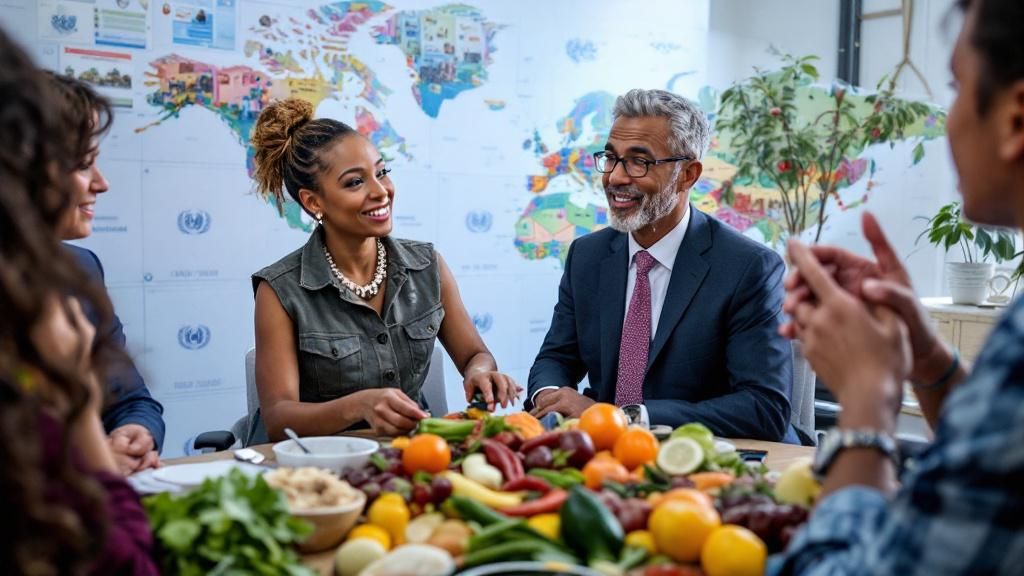
The United Nations has launched an far-reaching initiative designed to combat the ongoing worldwide challenges of poverty and hunger that persistently affect millions worldwide. This comprehensive programme constitutes a crucial turning point in international development, combining creative solutions, significant funding pledges, and coordinated work from member states to produce enduring transformation. The initiative addresses root causes whilst offering urgent assistance, promising to reshape how the global community tackles these linked issues. Discover how this groundbreaking approach seeks to revolutionise lives and build a more equitable future.
Worldwide Approach to Poverty Emergency
The United Nations’ latest programme represents a watershed moment in the worldwide fight against poverty and hunger. By deploying funds across several continents and engaging both developed and developing nations, the UN seeks to create a unified approach that transcends conventional limits. This joint effort recognises that hunger and poverty are linked problems requiring coordinated effort. The programme unites national governments, non-governmental organisations, and private sector partners to guarantee broad reach and lasting results across disadvantaged areas.
Member states have made a commitment to substantial amounts of collaborative work, committing financial support and technical expertise to strengthen existing programmes. The initiative emphasises openness and responsibility, setting clear metrics to assess outcomes and effectiveness. By drawing on existing infrastructure and expanding on proven regional approaches, the UN works to maximise efficiency and minimise duplication of efforts. This coordinated approach ensures that support goes to those with greatest need whilst creating resilient systems able to managing future crises successfully.
Immediate Action Plans
The initiative’s opening phase focuses on urgent assistance and swift action in territories affected by acute food insecurity and acute hardship. Emergency food supplies, healthcare support, and temporary shelter programmes are being rolled out to affected communities within weeks. The UN has established quick-action units furnished with capability to evaluate ground-level circumstances and adapt measures accordingly. These urgent measures aim to preserve life whilst sustained strategies are being implemented, ensuring vulnerable populations obtain vital assistance without delay.
Financial funding channels have been streamlined to speed up aid distribution to frontline organisations working within affected areas. Local partners and community representatives are being enabled to identify key priorities and direct resources in a streamlined manner. Training schemes for distribution staff ensure that assistance is delivered to target recipients whilst preserving respect and cultural awareness. These urgent steps serve as a connection between crisis response and sustainable development, offering breathing space for communities to stabilize and commence recovery.
Sustained Strategic Goals
The programme establishes ambitious targets for poverty reduction and improving food security over the following ten years. Strategic investments in farming infrastructure, learning and development, and medical infrastructure aim to address underlying causes of poverty rather than just managing surface-level issues. The UN has undertaken to support family farmers through sharing technological expertise and market linkage initiatives, enabling them to enhance yields without harming the environment. These foundational investments establish routes for local populations to reach self-reliance and economic independence whilst protecting the environment.
Long-term success necessitates institutional strengthening and capacity building within national governments and community-based entities. The initiative emphasises skills development, administrative enhancements, and economic diversification to create robust economic systems equipped to withstand future shocks. By encouraging business creation and advancing equitable development, the initiative aims to create lasting job prospects. These targeted allocations represent a significant transformation towards empowering communities to determine their future direction, ensuring lasting transformation outside the initiative’s formal timeframe.
Implementation and Partnership Framework
The UN’s programme operates through a multi-tiered delivery framework that involves governments, civil society groups, and commercial stakeholders. By creating regional hubs across Africa, Asia, and Latin America, the initiative guarantees culturally tailored responses that tackle regional needs. This locally-focused structure enables rapid response capabilities whilst preserving supervision from UN headquarters. Collaborations with global development organisations offer vital financial mechanisms, supporting enduring infrastructure initiatives that provide work opportunities and strengthen nutrition structures across vulnerable regions.
Success is contingent upon authentic partnership between industrialised and emerging nations, with transparent accountability mechanisms guaranteeing resources reach intended beneficiaries. The framework incorporates skills development initiatives that bolster local institutions and empower communities to become self-reliant. Continuous evaluation through independent audits and local input mechanisms upholds programme quality and effectiveness. By building enduring collaborations rather than temporary aid arrangements, the UN initiative seeks to create systemic change that disrupts cycles of hardship and malnutrition, ultimately developing resilient societies capable of environmental and economic progress.
